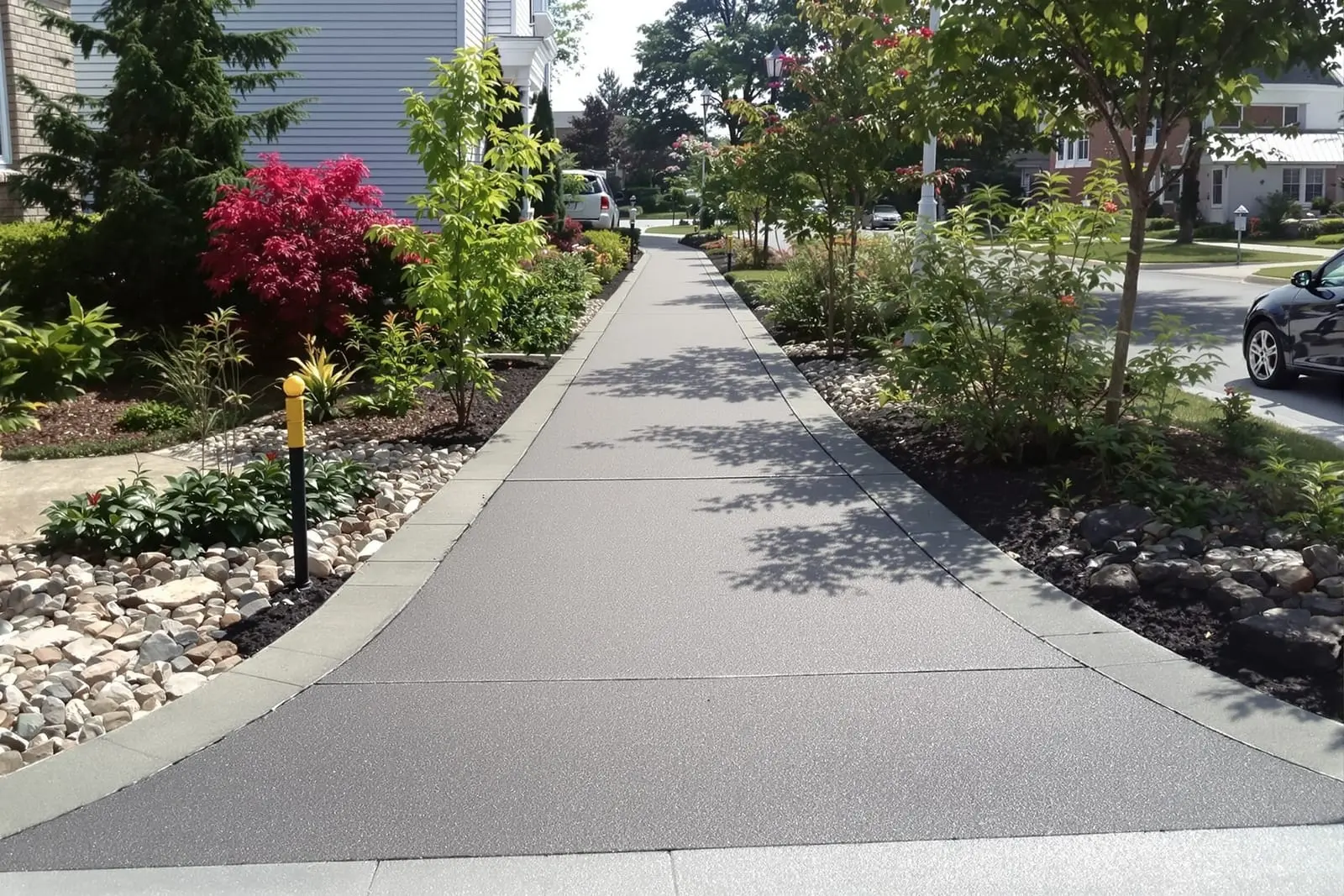
Connect people and places with asphalt sidewalks and trails in Fort Wayne, IN. We build smooth, accessible paths for parks, campuses, and commercial properties. Our team follows proper grades and clearances to create comfortable routes for walking, jogging, and cycling.
Prestige Asphalt Fort Wayne provides professional asphalt sidewalks throughout Fort Wayne, IN and the surrounding area. Our licensed, insured crew delivers safe, clean, on-time work with a free estimate before anything begins. Call (260) 286-5320 or request your free quote.
Durable asphalt sidewalks, paths, and trails in Fort Wayne
If you want a clean, safe place to walk that holds up to Northeast Indiana weather, properly built asphalt sidewalks and pathways are a solid choice. Prestige Asphalt Fort Wayne designs and installs residential walkways, neighborhood paths, and small community trails around Fort Wayne that are meant to survive freeze-thaw cycles, snow removal, and steady foot traffic.
Asphalt makes sense in our area because it flexes a bit with temperature swings. Where concrete may crack in long straight panels, asphalt pathways can be laid with a mix and thickness that lets them move slightly without breaking apart as quickly. That flexibility is why many parks, greenways, and school campuses in Indiana choose asphalt for their walking paths.
We focus on details like drainage and base preparation, not just the black surface you see. If a sidewalk or trail is heaving or crumbling after only a few winters, the problem is usually below the surface. Our goal on every project is to build from the ground up in a way that handles Fort Wayne’s clay-heavy soils and standing water, so you do not have to keep patching the same spots year after year.
How we build an asphalt sidewalk or pathway, step by step
A good looking asphalt sidewalk starts long before the first ton of hot mix shows up. Prestige Asphalt Fort Wayne follows a clear process so you know what is happening in your yard or on your site at each stage.
1. Site visit and layout: We walk the route with you, flag utilities, talk about slope, and look at how water currently moves across the property. For backyard paths or connections to patios, we pay attention to how you actually walk the space now, then adjust widths and curves so the new sidewalk matches real use instead of just a drawing.
2. Excavation and subgrade shaping: For most sidewalks and narrow trails, we excavate 6 to 10 inches below finished grade, depending on soil conditions and traffic. In softer or low-lying Fort Wayne areas, such as spots near drainage swales or wooded back lots, we may go deeper or undercut soft spots. The subgrade is then compacted with plate compactors or small rollers until it is firm and does not rut under foot.
3. Base stone installation: We install a compacted aggregate base, often a graded limestone mix, in one or two lifts. Each lift is compacted separately so the base locks together. Typical base thickness ranges from 4 to 8 inches. Heavier use trails, such as HOA loops that occasionally see maintenance vehicles, get a thicker and more carefully graded base.
4. Edge control: On residential walkways we can use topsoil shoulder edges, narrow concrete ribbon edges, or steel edging depending on budget and look. For small community trails we usually build a stone shoulder so water has somewhere to go and the edge does not crumble when mowers run nearby.
5. Asphalt paving: We place hot mix asphalt at a final compacted thickness that usually lands between 2 and 3 inches for sidewalks and light-use paths. The mix type may change based on use. A slightly coarser mix works well for public trails that might see bicycles and strollers, while a finer surface mix can give a smoother look for front-walk applications.
6. Rolling and compaction: A small double-drum roller or vibratory plate is used to compact the asphalt while it is still workable. Proper compaction eliminates air pockets and locks the stone together so the surface can handle our winter cycles without raveling.
7. Clean up and tie-in: We feather the edges into surrounding turf or landscaping, repair disturbed lawn areas, and if needed we can add topsoil and seed along the edges to finish the job cleanly.
Design options for walkways, sidewalks, and small trails
There is more to asphalt sidewalks than a straight black strip. Prestige Asphalt Fort Wayne can help you design a path that fits your property and the way people actually use it.
Width choices: For a basic residential sidewalk from driveway to front door, many Fort Wayne homeowners choose 3 to 4 feet wide. Backyard garden paths or connections to sheds might stay narrower, around 3 feet, to save space and cost. For shared-use or neighborhood loops where people may pass each other, 6 to 8 feet is more comfortable.
Route and slope: We try to avoid steep pitches that become slippery in winter. Where we cannot avoid a slope, we may use a slightly more textured mix and recommend railings or side grading to direct meltwater away from the walking surface. For older neighborhoods with established trees, we sometimes shift the route to avoid major roots instead of cutting them and risking tree decline.
Edges and transitions: You can finish edges with clean turf, a rock bed, or landscape borders. At driveways and street connections, we build smooth transitions with no harsh lip so strollers, walkers, and bikes can roll over them easily. In HOA or small commercial settings, we can coordinate our elevations with existing concrete approaches and curb ramps so everything meets ADA slope guidelines where required.
Surface look and longevity options: Standard asphalt has a dark black look that fades to charcoal over a year or two. If you want to keep it looking sharp longer, we can plan ahead for a sealcoating schedule. For high visibility community trails, you can also consider striping or painted edge lines to help with nighttime use and to define lanes where there is mixed bicycle and pedestrian traffic.
What affects cost and lifespan of asphalt sidewalks in Fort Wayne
Pathway and sidewalk pricing is not a flat number per foot, because the ground and usage change from property to property. Prestige Asphalt Fort Wayne is straightforward about what drives costs so you understand your estimate.
Site conditions: Poor soil that pumps water, low spots that turn into ponds, or lots of tree roots all add labor. In some Fort Wayne neighborhoods built on heavier clay, we may need more excavation and additional base stone to keep the path from settling. Limited access that prevents use of machinery and forces more hand work can also affect price.
Thickness and base: A thin, 1.5 inch asphalt layer over a skimpy base might look fine the first season, but it will not last through many winters. When comparing quotes, ask each contractor for the planned base thickness, base material type, and finished asphalt thickness, not just the total price. Spending a little more on base and thickness can add years to the life of an asphalt sidewalk or trail.
Use type: A private garden walkway that only sees foot traffic can often be built lighter than an HOA perimeter trail that occasionally gets small service vehicles. We match the design to real use, which may slightly raise cost up front but helps you avoid rutting or cracking from unexpected loads.
Weather and timing: In Fort Wayne, the best time to install new asphalt sidewalks is typically from late April through October. We avoid paving when the ground is frozen or saturated, or when air temperatures are too low for proper compaction. Trying to squeeze a job in during a cold snap can result in weak bonds between stones and a shorter lifespan.
Care after installation: You can usually walk on a new pathway within a day, but we recommend keeping heavy equipment off for at least several days. Routine maintenance is simple. Keep gutters and downspouts from dumping directly onto the path, sweep off loose stone or debris so it does not grind into the surface, and consider sealcoating every few years if you want extra protection from water and sun.
Common issues, repairs, and what to ask before you hire
Many of the repair calls Prestige Asphalt Fort Wayne gets for asphalt sidewalks and trails come from projects that were rushed or underbuilt. Understanding typical problems will help you avoid them on your own project.
Frost heave and bumps: Uneven heaving often points to poor base or trapped water. When we repair these areas, we usually saw cut the affected section, remove soft subgrade, rebuild the base, and repave. On new projects we set slopes and ditches so meltwater and stormwater have somewhere to go instead of sitting under the path.
Cracking near trees: Tree roots looking for air and moisture can push on the underside of the asphalt. In tree-heavy yards, we try to route paths outside the critical root zones or use root barriers in select locations. If a root has already caused damage, we carefully expose it, decide if it can be bridged or worked around, then rebuild the path so the same crack does not show up again next year.
Edge crumbling: Unsupported edges break down when people or mowers ride too close. For narrow sidewalks that border lawn, we often recommend a compacted stone or topsoil shoulder that supports the edge while still letting water drain. In higher traffic areas we may suggest a more defined border that protects the pavement.
Before you hire any asphalt contractor for sidewalks, pathways, or trails in Fort Wayne, ask a few direct questions. What thickness of base and asphalt will you use and what specific materials. How will you handle drainage along the path. What compaction equipment will be used, and how many passes do you typically make. Clear answers to these questions will tell you more about the quality of the job than any brochure.
When you work with Prestige Asphalt Fort Wayne, you get those details in writing and a crew that is used to building smaller, people-focused paths, not just driveways and parking lots. That focus helps ensure your new asphalt sidewalk or trail is comfortable to walk on, drains properly, and stands up to Fort Wayne winters without constant patching.
“
Professional asphalt pathways, sidewalks, and trails, done right the first time, quality materials, honest pricing, and results that last.
Prestige Asphalt Fort Wayne
Asphalt Pathways, Sidewalks, and Trails Across Our Service Area