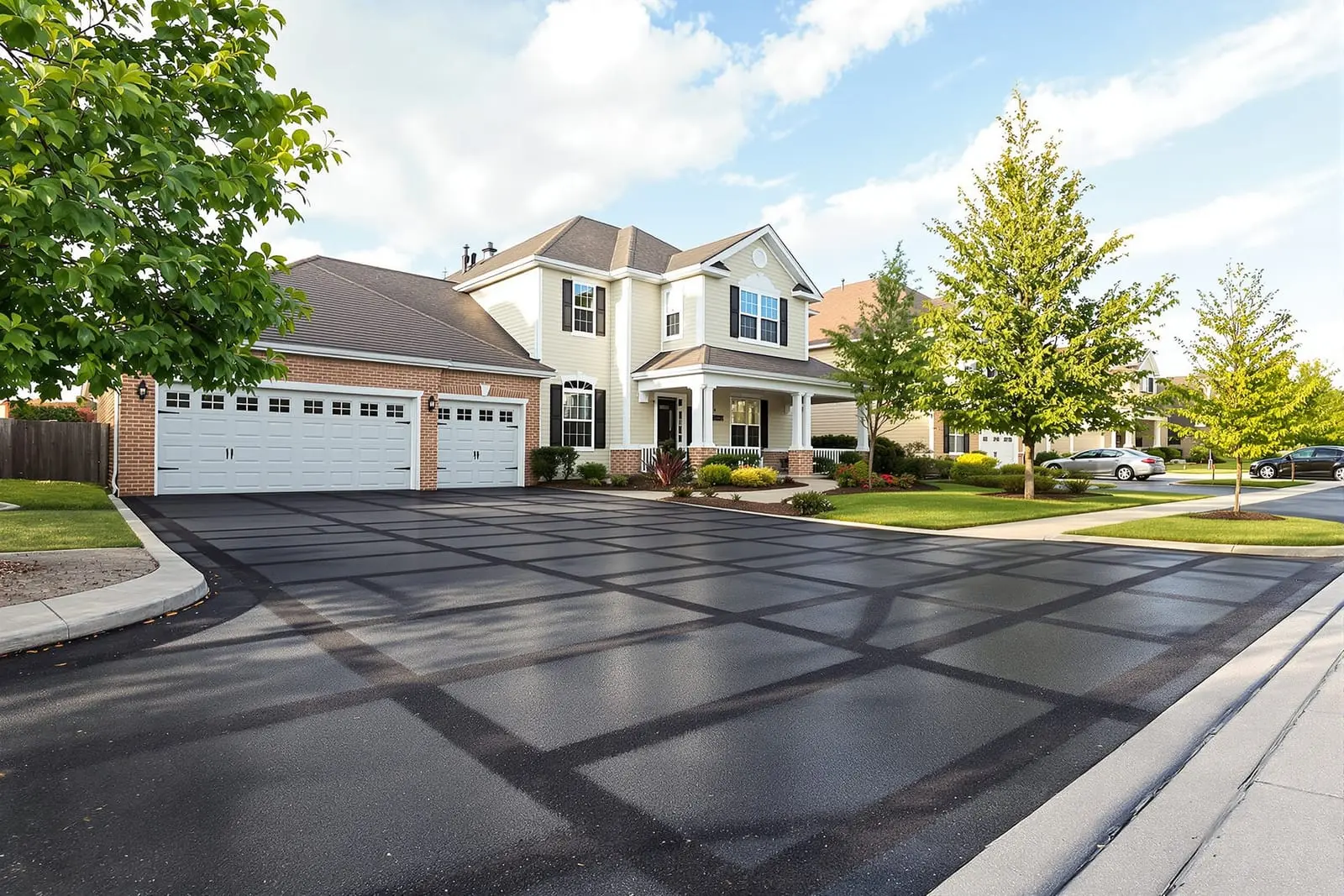
Partner with a dependable contractor for municipal paving in Fort Wayne, IN. We handle neighborhood streets, access roads, and public facilities with compliant asphalt mixes and compaction. Our team delivers smooth, safe driving surfaces that meet project specs and timelines.
Prestige Asphalt Fort Wayne provides professional municipal paving throughout Fort Wayne, IN and the surrounding area. Our licensed, insured crew delivers safe, clean, on-time work with a free estimate before anything begins. Call (260) 286-5320 or request your free quote.
Municipal Paving Focused on Fort Wayne’s Real-World Conditions
Prestige Asphalt Fort Wayne handles road, street, and municipal paving projects with a clear focus on how pavement actually performs in our local climate and traffic. We work on neighborhood streets, access roads, alleys, and city-owned lots across Fort Wayne and the surrounding Allen County communities.
Around Fort Wayne, freeze-thaw cycles, snowplow blades, and occasional heavy truck traffic are what break pavements down. We design municipal paving jobs so the asphalt structure matches the use. A neighborhood cul-de-sac in Aboite or Arlington Park does not need the same build as an industrial access road off Coliseum Boulevard. We look at traffic counts where available, turning movements, and drainage patterns before recommending a section design.
Our crews are familiar with tying new asphalt into existing streets in older neighborhoods with 1950s and 1960s infrastructure, as well as coordinating with newer subdivisions where utility cuts are common. We plan projects so emergency vehicles, trash collection, school bus routes, and mail service can keep moving. That includes phasing, temporary access lanes, and clear communication with your public works staff or HOA representatives.
When Prestige Asphalt Fort Wayne says municipal paving, we are talking about projects for cities, towns, public agencies, and private groups that manage shared roads. That can be anything from resurfacing a small city-owned parking loop behind a library to building a new connector road in a business park. The scale changes, but the process stays disciplined and focused on safety and pavement life.
How Road, Street, and Municipal Paving Actually Gets Done
Our municipal paving work follows a clear set of steps so your road holds up for years, not months.
1. Field assessment and cores. We start by walking and driving the route with your staff, noting base failures, rutting, drainage issues, and utility conflicts. For bigger projects, we recommend taking asphalt cores or test pits to see how thick the existing pavement and stone base really are. This helps decide whether milling and resurfacing is enough or if sections need full-depth reconstruction.
2. Design and thickness selection. Based on traffic type (cars only, buses, city trucks, semi traffic) and subgrade conditions, we recommend layer thicknesses. For a typical Fort Wayne residential street, that might be 1.5 inches of surface over 1.5 inches of binder, with 6 to 8 inches of compacted aggregate base. A bus route or industrial road may need thicker asphalt and stronger stone or stabilized base.
3. Drainage and elevation planning. Our foreman checks where water sits after storms and plans cross slope and gutter tie-ins accordingly. In older Fort Wayne neighborhoods with shallow curb reveal and limited storm inlets, we are careful to adjust the milling and paving depth so water still moves toward existing drains instead of into driveways or yards.
4. Milling and surface preparation. On resurfacing jobs, we mill off the existing surface to a set depth, usually 1.5 to 2 inches, and clean with brooms and blowers. Any failed base spots are saw cut, dug out, and replaced with new stone and asphalt. Manholes, valves, and inlets are exposed, adjusted, or protected so they do not end up buried or too high after paving.
5. Binder and surface paving. Where a new structure is needed, we place binder course first to build strength, then a finer surface mix on top. Mixes come from local plants and are chosen for rut resistance and cold-weather performance. We use steel drum and pneumatic rollers in a set pattern to achieve target compaction. Proper compaction is what gives you long life and fewer potholes.
6. Joints, utilities, and transitions. A lot of long-term cracking starts at joints. We stagger joints where possible, heat and compact them well, and seal longitudinal joints on many projects. At drive approaches and side streets, we feather transitions so cars and plows do not hit a hard bump. Utility castings are brought flush with the final surface and checked by hand and with straightedges.
7. Striping and signage. Pavement markings are laid out to meet local standards for lane width, bike lanes, crosswalks, and stop bars. For municipal work, we confirm marking plans with the city or engineer in advance so there are no surprises when the road reopens.
Material Options, Mix Choices, and What Drives Cost
Municipal paving cost is driven by four main factors: thickness, area, base condition, and traffic requirements. Prestige Asphalt Fort Wayne is upfront about these so you can prioritize where to invest.
Asphalt mix type: For low speed residential streets, we often use a finer surface mix that gives a smoother ride and quiets traffic. For bus routes, intersections near schools, or roads that see turning trucks, we may recommend a heavier duty surface mix with a tougher aggregate blend to resist shoving and rutting. These mixes can cost slightly more per ton but usually extend life, especially where vehicles stop and start often.
Thickness and base work: Adding half an inch across an entire subdivision can mean many more tons of asphalt. Sometimes that is worthwhile, sometimes it is smarter to keep thickness modest and focus on fixing specific base failures. In older Fort Wayne areas where clay soils are common and drainage is weak, we may need to deepen the stone base or add geotextile fabric to separate clay from stone. That kind of prep costs more up front but cuts down on wheel track depressions and alligator cracking.
Phasing and traffic control: If a project must stay open to traffic at all times, requires night work, or involves complex detours near schools or hospitals, labor and set up time go up. We work with you to group streets or blocks in a way that minimizes lane shifts and flagging hours without backing up traffic.
Crack resistance and maintenance plans: Some municipalities and HOAs want a pavement that pairs well with scheduled crack sealing and sealcoating. We can adjust the mix and joint layout so future maintenance is practical. For example, if an HOA near Dupont Road wants a 15 year plan, we may recommend a thicker initial surface and a set schedule for crack sealing every few years to slow water infiltration.
Local plant availability: In peak season, Fort Wayne asphalt plants run at full capacity. Choosing commonly stocked mixes and realistic daily production rates keeps your job on schedule and avoids paying for small specialty runs that can drive up the per-ton price.
Common Road and Street Problems in Fort Wayne and How We Handle Them
Municipal pavements around Fort Wayne tend to show the same kinds of distress, and how they are handled during a paving job makes a big difference in how long the new surface lasts.
Potholes and alligator cracking: These usually point to failing base or saturated subgrade. Instead of just paving over, we mark out those areas during the pre-pave walkthrough, saw cut around them, excavate to solid material, then rebuild with compacted stone and base asphalt. Skipping this step is one of the main reasons new overlays fail early.
Reflective cracking from old joints: Many older streets have been patched several times, which leaves a patchwork of joints. If you simply overlay them, those cracks can reflect through within a couple of winters. Depending on the budget and road importance, we may mill deeper over joint lines, use a leveling course to smooth, then apply a tack coat carefully so the new layer bonds well and cracks are slowed.
Poor drainage and standing water: Fort Wayne winters are hard on any place water puddles and then freezes. We look at gutter lines, shoulder conditions, and ditch slopes. If water consistently stands in one lane, we may adjust cross slope slightly, deepen the crown, or add localized milling to restore flow. On some municipal jobs, we also recommend small drainage improvements like cleaning plugged curb inlets before paving so the new road is not undermined.
Utility patch fatigue: Streets near downtown, the Near Northside, and older commercial areas often have many utility cuts. Each patch edge is a potential crack. Our approach is to grind and rework larger stretch sections instead of leaving many small patch islands. We also communicate with utilities before paving, encouraging them to complete planned work so the new asphalt is not immediately cut open.
Snowplow wear: Snowplows running in and out of Fort Wayne neighborhoods can scrape off poorly bonded thin lifts and wear down markings. On roads that see frequent plow passes, we avoid fragile edges, make sure castings are slightly recessed but not dangerous, and specify durable, properly cured markings so they last through winter operations.
What Local Agencies, HOAs, and Property Managers Should Know Before Hiring
Before you commit to a municipal paving contractor, there are a few practical steps that will protect your budget and your roads.
Clarify goals and maintenance expectations. Decide whether your priority is lowest initial cost or lowest life cycle cost. If a township road near Fort Wayne International Airport is due for reconstruction in ten years, a lighter overlay may be fine. If a subdivision road in a stable neighborhood is expected to carry school buses and local traffic for decades, investing in stronger base and thicker lifts makes sense. Prestige Asphalt Fort Wayne walks through these tradeoffs in plain language so you can explain them to boards or councils.
Check traffic and loading. Gather whatever information you have on bus routes, truck restrictions, and planned developments. If a new warehouse is going in at the edge of your jurisdiction, your quiet road may soon see regular semi traffic. We can then adjust design now, when it is cheaper than tearing up a road that was underbuilt.
Coordinate with utilities and other projects. Contact water, sewer, gas, and telecom providers and ask about near term planned work. It is much more cost effective to pave after major utility replacements. We can help sequence milling, patching, and final paving so you do not pave over areas that are likely to be dug up again soon.
Ask about equipment and crew size. Municipal paving needs consistent production to finish streets quickly and return them to service. We use a paver sized correctly for city and subdivision streets, matched with enough trucking and rolling capacity to keep seams tight and avoid cold joints. This matters on busier collectors, where long open joints cause premature cracking.
Plan for communication with residents. For HOA and subdivision work, we provide notice templates that boards can email or post so residents know when their block will be milled and paved, how trash pickup will be handled, and where to park. For city and town jobs, we coordinate signs and door hangers where needed. Clear communication keeps projects moving and reduces complaints.
When you bring Prestige Asphalt Fort Wayne into a municipal paving project, you get a contractor that understands both the engineering side and the practical side of working around daily life in Fort Wayne. Our aim is straightforward: streets that drain, plows that run smoothly, and a pavement structure that holds up under the traffic you actually have, in the climate we all share.
“
Professional road, street, and municipal paving, done right the first time, quality materials, honest pricing, and results that last.
Prestige Asphalt Fort Wayne
Road, Street, and Municipal Paving Across Our Service Area